By: Amar Kapoor, CEO Terra Grande by Eldeco
For decades, the language of real estate investment has been dominated by familiar metrics: capital appreciation, rental income, location advantage, liquidity and long-term returns. But the definition of value is evolving, particularly at the luxury end of the residential market.
For India’s affluent and globally mobile buyers, a home is increasingly expected to deliver something beyond financial performance. It must create time, wellbeing, privacy, meaningful experiences and a better quality of life.
This is where a new idea is beginning to emerge: “Life Yield.”
Life Yield is not a financial metric in the conventional sense. It is a way of looking at residential real estate through the experiences and benefits an asset generates over time from the ability to disconnect from urban pressures to the convenience of a fully managed home, access to wellness and nature, and the opportunity to spend meaningful time with family.
From financial ROI to emotional ROI
Luxury has traditionally been associated with bigger spaces, premium materials and exclusivity. Today, however, the premium is increasingly attached to what a home enables rather than simply what it contains.
A residence that provides privacy, access to nature, wellness infrastructure and opportunities for social connection can potentially contribute to a very different form of return: emotional and experiential value.
The shift is visible in the growing importance of wellness within real estate. According to the Global Wellness Institute’s 2025 research, wellness real estate was valued at approximately $548 billion globally in 2024, having grown at an average annual rate of 19.5% between 2019 and 2024. GWI projects the market to reach approximately $1.1 trillion by 2029, while its estimate for India places the wellness real estate market at around $13 billion in 2024, with an annual growth rate of approximately 20.3% between 2019 and 2024. These figures describe the scale and growth of the wellness real estate market; they do not, by themselves, establish that a particular residence delivers specific health or emotional outcomes for its residents.
What this market growth does indicate, however, is that wellness is becoming an increasingly relevant dimension of residential value. For luxury buyers, this creates an opportunity to think about a home not only as an asset, but also as an environment that can support the way they want to spend their time and live their lives.
The home as a lifestyle hedge
For affluent households, diversification has traditionally meant spreading capital across equities, businesses, financial instruments and real estate. But diversification can also have a lifestyle dimension.
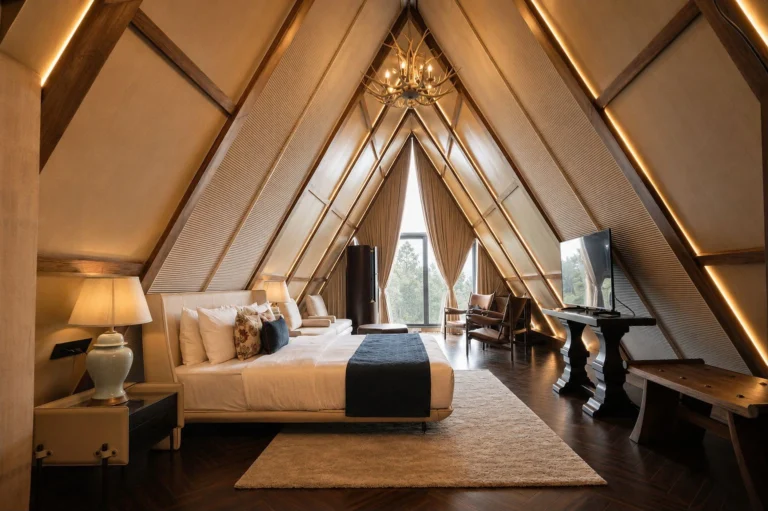
A second or destination home can provide an alternative environment to the primary urban residence a place where the rhythm of everyday life changes.
The value lies partly in optionality: the ability to move between environments depending on the demands of work, family and personal priorities.
The case for destination residences, therefore, is less about a single market statistic and more about the changing role that a second home can play in the lives of affluent households. For some buyers, it can represent a deliberate choice to create greater distance from the density and pace of urban living, while providing a private setting for family time, leisure, longer stays.
This is where the idea of Life Yield becomes relevant. The value of such a residence may not be captured entirely by its appreciation potential or resale value, but also by how frequently it is used, the quality of time it enables and the experiences it makes possible.
The question, therefore, is moving from “How much will this property appreciate?” to a broader one: “What does owning this property add to my life?”
The luxury of zero drag
One of the least discussed costs of owning a second home is not financial. It is friction.
A house that requires constant supervision, maintenance, staffing, repairs and preparation can quickly become another responsibility rather than an escape.
This is why fully managed residences represent an important evolution in second-home ownership.
The real luxury is not simply having a beautiful home waiting at the end of a journey. It is having a home that is ready for you without requiring you to manage it.
Arrive, unlock the door and begin living.
This concept of “zero drag” can become particularly valuable for entrepreneurs, business leaders and globally mobile families whose most constrained resource is often not money, but time.
A managed home can therefore deliver a form of time return: fewer operational responsibilities and more hours available for family, recreation, wellness and experiences.
From amenities to an ecosystem
The next generation of luxury residences is also moving beyond the conventional amenity checklist.
A gym, swimming pool or clubhouse by itself may no longer define a meaningful wellness proposition. Instead, buyers are increasingly looking at whether the entire environment supports a healthier and more balanced lifestyle.
The Global Wellness Institute’s latest research describes this movement as a shift from physical wellness towards multidimensional wellness, encompassing physical, mental, social, community, environmental and economic dimensions.
That creates an opportunity for residential developments to think of wellness as an ecosystem rather than a collection of facilities.
Nature, architecture, nutrition, movement, recreation, social spaces, privacy and hospitality can work together to create an environment in which wellbeing is integrated into everyday living.
The distinction is important. Wellness should not simply be something a resident schedules into a calendar. Ideally, the environment itself should make healthier choices easier and more natural.
Measuring What Money Cannot
The idea of Life Yield does not diminish the importance of financial returns. Capital appreciation, asset quality, location and long-term value will continue to remain fundamental considerations in any serious property decision. What Life Yield does is broaden the definition of value by looking beyond what can be measured on a balance sheet. It considers the meaningful family moments a home can create, the time that can be reclaimed when a residence is professionally managed, the opportunities it provides to reconnect with nature and whether it can become a setting where multiple generations come together. It also asks whether ownership can create experiences that might otherwise require repeated travel, planning and logistical effort. Ultimately, the more important question may be whether an asset contributes meaningfully to the way its owners want to live because some of the most valuable returns from a home may never appear as a number on a financial statement.
The luxury residential market is consequently entering a more nuanced phase. The strongest propositions may not simply sell square footage, views or amenities. They may sell a more intangible promise time better spent, greater connection with nature, easier access to wellbeing and a setting in which memories can accumulate.