Black Opal Consultants Limited does not build property. It sells it — for more than 25 developers, through 300 broker partners, to over 2,200 customers, adding up to more than ₹4,000 crore of sales so far. Now it is putting ₹26 crore of its IPO money into the construction of a commercial project in Ayodhya, and ₹7 crore into winning fresh sales mandates in Delhi-NCR.
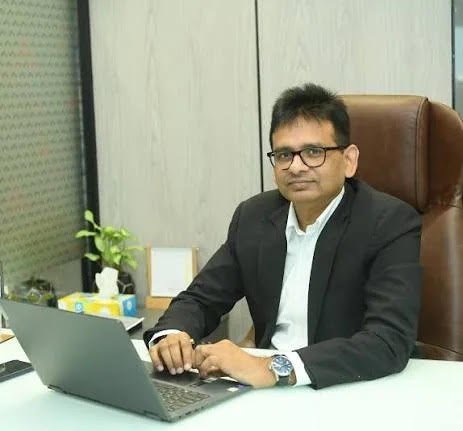
Promoter and Managing Director Prasoon Chauhan spoke to द रियल्टी स्टैंडर्ड about why a sales firm is funding a build, what he will not promise on returns, and why he says he is not chasing growth at any cost.
Q: You have worked in real estate and financial services for more than two decades. What did you learn in that time that shaped Black Opal?
Prasoon: The biggest learning is that real estate needs a far more structured approach to transactions and relationships.
When we started Black Opal, the aim was to build a platform that could bring structure to the way developers, channel partners, investors and buyers deal with each other. Over time we moved from doing one-off transactions to building a network and a business model we could repeat.
Today we work with more than 25 developers, 300 broker partners and over 2,200 customers. The journey also taught us to be selective. We have kept the core advisory and sales business relatively asset-light, and we look at project-level opportunities only where our market understanding and distribution network can add value.
Q: Your revenue has gone from ₹19.75 crore in FY24 to ₹41.97 crore in FY26. What is behind that, and where do you want to be in three years?
Prasoon: The growth has come from more developer mandates, more transactions, and better use of the network we have built across developers, brokers and customers.
We have facilitated more than ₹4,000 crore of real estate sales since we started. That has given us relationships and experience across projects and markets. The focus now is to keep adding good mandates, go deeper in the markets we are already in, and move into new cities selectively.
We know real estate can be cyclical, so our approach is not to pursue growth at any cost. We want a bigger but disciplined platform, with careful selection of mandates and projects, and sustainable operating economics.
Q: Sales and advisory is your main business. You are also starting to put money into projects. How do the two work together after the IPO?
Prasoon: They are complementary. Advisory, sales and distribution remains the core platform. It is relatively asset-light and it tells us what demand looks like, how a project should be positioned and how customers behave.
The project-led business lets us take part where we see a clear strategic fit. Our distribution network and customer relationships can also support those projects.
So we are not moving away from the core business. Project participation is an extra growth avenue, and we will pursue it selectively, based on the quality of the opportunity, the development partner, location, demand and project economics.
Q: ₹26 crore of the IPO money goes to Aurika Developers LLP and ₹7 crore towards new sales and marketing mandates. What do you expect from each?
Prasoon: The two allocations address different parts of the growth strategy.
The ₹7 crore for sales and marketing mandates lets us go after more opportunities and expand the advisory and sales platform in Delhi-NCR.
The ₹26 crore in Aurika Developers LLP is for the construction of its RERA-approved commercial project in Ayodhya. That fits our strategy of taking part selectively at the project level.
At this stage we would rather focus on disciplined deployment of capital than give specific revenue or return guidance. The objective is to put the funds into identified opportunities and build value over the project cycle, while continuing to strengthen the core business.
Q: FY26 EBITDA was ₹16.67 crore at a margin of 39.73%, and profit after tax was ₹12.22 crore. As project work grows, what happens to margins?
Prasoon: The FY26 performance reflects the operating leverage in our advisory and sales business.
As we scale, operating discipline stays important. The project-led business has a different capital and execution profile from advisory, so we would look at how the overall platform performs rather than at short-term margin movements.
The priority is to grow while keeping healthy operating economics and disciplined capital deployment. An asset-light core business plus selective project participation gives us the flexibility to grow and still stay measured about how we put capital to work.